BREAKING: US vs Iran Nuclear SHOWDOWN – Is War Next?

Tensions between the United States and Iran have escalated once again after Tehran firmly rejected Washington’s latest diplomatic efforts to negotiate a new nuclear agreement. In response, U.S. officials have warned of possible military action, raising fears of a renewed conflict in the Middle East.
The Standoff: Iran’s Rejection of Diplomacy
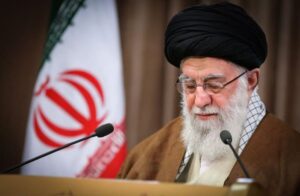
In recent weeks, the U.S. government, led by President Donald Trump, reached out to Iran’s Supreme Leader, Ayatollah Ali Khamenei, with a proposal aimed at reviving nuclear talks. The letter emphasized the necessity for Iran to provide verifiable proof that it has ceased its nuclear weapons development, in exchange for the easing of economic sanctions. However, Iran has refused to engage, viewing the U.S. outreach as insincere and an extension of Washington’s “maximum pressure” strategy.
Ayatollah Khamenei publicly dismissed the offer, stating that Iran would not negotiate under external threats and economic coercion. According to Iranian state media, the Supreme Leader accused the U.S. of using diplomacy as a tool of intimidation, rather than genuine engagement. He reiterated that Iran’s nuclear program remains peaceful and that the country would not bow to Western demands.
Washington’s Response: A Possible Military Option
The White House has reacted strongly to Iran’s rejection, with senior officials warning that all options remain on the table, including military action. U.S. Secretary of State Antony Blinken stated that if Iran continues to advance its nuclear program without oversight, the U.S. and its allies “will not hesitate to respond decisively.”
In addition to verbal warnings, the Pentagon has reportedly increased military readiness in the region. Recent satellite imagery suggests an uptick in U.S. naval activity near the Persian Gulf, and sources within the Department of Defense have indicated that contingency plans are being reviewed. While no formal military actions have been announced, the increased presence signals that Washington is serious about enforcing its red lines on Iran’s nuclear ambitions.
Internal Power Struggles in Iran
The situation is further complicated by political divisions within Iran. President Masoud Pezeshkian, seen as a moderate, has expressed willingness to engage with Western powers under the right conditions. However, hardline factions, closely aligned with the Islamic Revolutionary Guard Corps (IRGC), have strongly opposed any dialogue with the U.S., fearing it could weaken their influence.
Recent reports indicate that hardliners have moved to sideline reformist voices within the government. In the past month, key officials who have advocated for engagement with the West, including Economy Minister Abdolnaser Hemmati, have faced impeachment efforts. Meanwhile, former Foreign Minister Mohammad Javad Zarif has come under pressure to distance himself from diplomatic discussions.
Regional and Global Reactions
The international community is watching these developments with growing concern. European allies, particularly France, Germany, and the UK, have urged restraint on both sides, emphasizing the need for diplomacy over military escalation. The European Union’s foreign policy chief, Josep Borrell, has called for an emergency meeting to discuss potential avenues for renewed negotiations.
Meanwhile, Israel has voiced strong support for Washington’s tougher stance. Israeli Prime Minister Benjamin Netanyahu has long warned that Iran is approaching nuclear weapons capability and has indicated that Israel would take unilateral action if necessary. This raises the risk of a broader conflict, as past Israeli strikes on nuclear facilities in Iraq and Syria demonstrate the country’s willingness to act preemptively.
What Happens Next?
As tensions mount, the possibility of a diplomatic breakthrough seems increasingly uncertain. If Iran continues to expand its nuclear program without international oversight, the risk of military confrontation will grow. On the other hand, if backchannel negotiations manage to reopen discussions, a temporary de-escalation could be achieved.
For now, the situation remains highly volatile. Both Washington and Tehran appear unwilling to make concessions, and the clock is ticking on a potential crisis that could reshape the region’s geopolitical landscape.
KEYWORDS
BREAKING: US vs Iran Nuclear SHOWDOWN – Is War Next?
BREAKING: US vs Iran Nuclear SHOWDOWN – Is War Next?
BREAKING: US vs Iran Nuclear SHOWDOWN – Is War Next?
BREAKING: US vs Iran Nuclear SHOWDOWN – Is War Next?
BREAKING: US vs Iran Nuclear SHOWDOWN – Is War Next?
BREAKING: US vs Iran Nuclear SHOWDOWN – Is War Next?
more details https://www.nytimes.com/2025/03/10/world/europe/iran-nuclear-trump-us.html