Iranian Perspectives on the Holocaust: A Controversial Legacy
The Holocaust, one of history’s most well-documented atrocities, remains a subject of international discourse and debate. While the overwhelming majority of historians and world leaders acknowledge the genocide of six million Jews by Nazi Germany, Iran’s political leadership has historically taken a more controversial stance. From outright denial to measured acknowledgment, Iranian presidents and supreme leaders have shaped a narrative that reflects broader geopolitical strategies, ideological commitments, and domestic political considerations.
This article delves into Iran’s varied perspectives on the Holocaust, exploring the statements and policies of its leaders, the reasons behind these positions, and their broader implications for Iran’s international relations.
Iran’s Position on the Holocaust: A Historical Overview
Iran’s stance on the Holocaust has fluctuated, depending largely on its leadership and political climate. While some leaders have engaged in Holocaust denial or revisionism, others have taken a more diplomatic approach, acknowledging the Holocaust but questioning its political ramifications, particularly concerning Israel.
Mahmoud Ahmadinejad: Holocaust Denial and Provocation
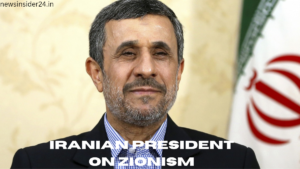
Mahmoud Ahmadinejad, Iran’s president from 2005 to 2013, became one of the most vocal Holocaust deniers on the world stage. His rhetoric was not only controversial but also strategically designed to challenge Western narratives and assert Iran’s position as a leader of resistance against Israel and the United States.
December 2005: Ahmadinejad famously called the Holocaust a “myth,” claiming that it was exaggerated to justify the establishment of Israel. His remarks triggered global condemnation, particularly from Western nations and Jewish organizations.
August 2006: In a letter to then-German Chancellor Angela Merkel, he suggested that the Holocaust narrative was used to humiliate Germany and to strengthen Israel’s legitimacy.
December 2006: Iran hosted the “International Conference to Review the Global Vision of the Holocaust,” which invited known Holocaust deniers and aimed to cast doubt on historical records.
Ahmadinejad’s statements and policies served multiple purposes. Domestically, they reinforced his image as a defiant leader standing against Western dominance. Internationally, they aligned Iran with anti-Israel movements and strengthened ties with groups that shared a revisionist view of history.
Ali Khamenei: Subtle Skepticism and Strategic Doubt
Iran’s Supreme Leader, Ayatollah Ali Khamenei, has also cast doubt on the Holocaust, albeit in a more measured manner than Ahmadinejad. Unlike outright denial, Khamenei’s approach has been to question the details of the Holocaust while using it as a rhetorical tool against the West.
March 2014: Khamenei stated that the reality of the Holocaust was uncertain, implying that the event might have been exaggerated for political purposes.
January 2016: On International Holocaust Remembrance Day, Khamenei’s official website released a video questioning the Holocaust’s veracity, further fueling controversy.
Khamenei’s stance is less about historical revisionism and more about challenging the legitimacy of Israel, which he sees as a Western-imposed entity. By questioning the Holocaust, he indirectly questions Israel’s right to exist, a cornerstone of Iran’s foreign policy.
Hassan Rouhani: A Diplomatic Shift
In contrast to his predecessor, Hassan Rouhani, Iran’s president from 2013 to 2021, adopted a more pragmatic approach. Seeking to improve Iran’s global image and negotiate better relations with the West, Rouhani distanced himself from Holocaust denial.
September 2013: In an interview with CNN, Rouhani condemned the Holocaust, stating that Nazi crimes against Jews and other victims were “reprehensible.” However, Iranian state media later accused CNN of misrepresenting his words, reflecting internal political tensions over Iran’s stance.
Rouhani’s approach marked a shift in Iran’s rhetoric, but it did not signify a fundamental change in policy. While his administration sought diplomatic engagement, the underlying skepticism toward Israel and Western narratives remained.
Why Does Iran Challenge the Holocaust Narrative?
Iran’s controversial stance on the Holocaust is not merely an issue of historical interpretation—it serves multiple strategic and ideological purposes.
1. Anti-Israel Ideology
Iran’s rejection of Israel as a legitimate state is deeply embedded in its political and religious ideology. By questioning the Holocaust, Iranian leaders attempt to undermine one of the central historical justifications for Israel’s creation. The narrative suggests that the Holocaust was either exaggerated or manipulated to garner sympathy for Jews and establish a Jewish state in the Middle East.
2. Defiance Against the West
Challenging the Holocaust allows Iran to position itself as a leading voice against Western dominance. Holocaust denial or revisionism serves as a tool to critique Western hypocrisy, pointing out instances where Iran believes historical events have been weaponized for political gain.
3. Domestic Political Gains
Holocaust denial or skepticism plays well with certain segments of Iran’s conservative population, reinforcing the narrative of Western manipulation and deceit. Leaders like Ahmadinejad leveraged this sentiment to bolster their political base, portraying themselves as fearless challengers of global injustices.
The Global Backlash and Its Consequences
Iran’s position on the Holocaust has not come without consequences. Western nations, particularly the United States and European countries, have strongly condemned Iranian Holocaust denial, viewing it as an affront to historical truth and a sign of extremism.
Diplomatic Isolation: Ahmadinejad’s Holocaust denial severely damaged Iran’s relations with Western powers, making negotiations on nuclear and economic issues more difficult.
Increased Sanctions: Iran’s inflammatory rhetoric contributed to the justification for sanctions, which further strained the country’s economy.
Strained Relations with European Countries: While Iran maintains some level of diplomatic engagement with Europe, its Holocaust rhetoric has often complicated these relationships, particularly with Germany and France.
Recent Developments: A New Approach Under Ebrahim Raisi?
Iran’s current president, Ebrahim Raisi, has yet to take a definitive stance on the Holocaust. However, his administration continues Iran’s broader policy of opposing Israel while maintaining strategic ambiguity on historical issues. Given the political landscape, it is unlikely that Iran will completely abandon its skepticism toward the Holocaust, though the rhetoric may fluctuate depending on diplomatic needs.
Conclusion: The Future of Iran’s Holocaust Narrative
Iran’s stance on the Holocaust is deeply intertwined with its ideological and geopolitical objectives. While some leaders have engaged in outright denial, others have adopted a more strategic form of skepticism. Regardless of the approach, the underlying goal remains the same: challenging Western narratives to serve Iran’s broader political interests.
As Iran navigates its future relations with the West, its position on the Holocaust may evolve. However, unless there is a fundamental shift in Iran’s ideological foundations, its leadership is likely to continue using Holocaust rhetoric as a tool for political leverage.